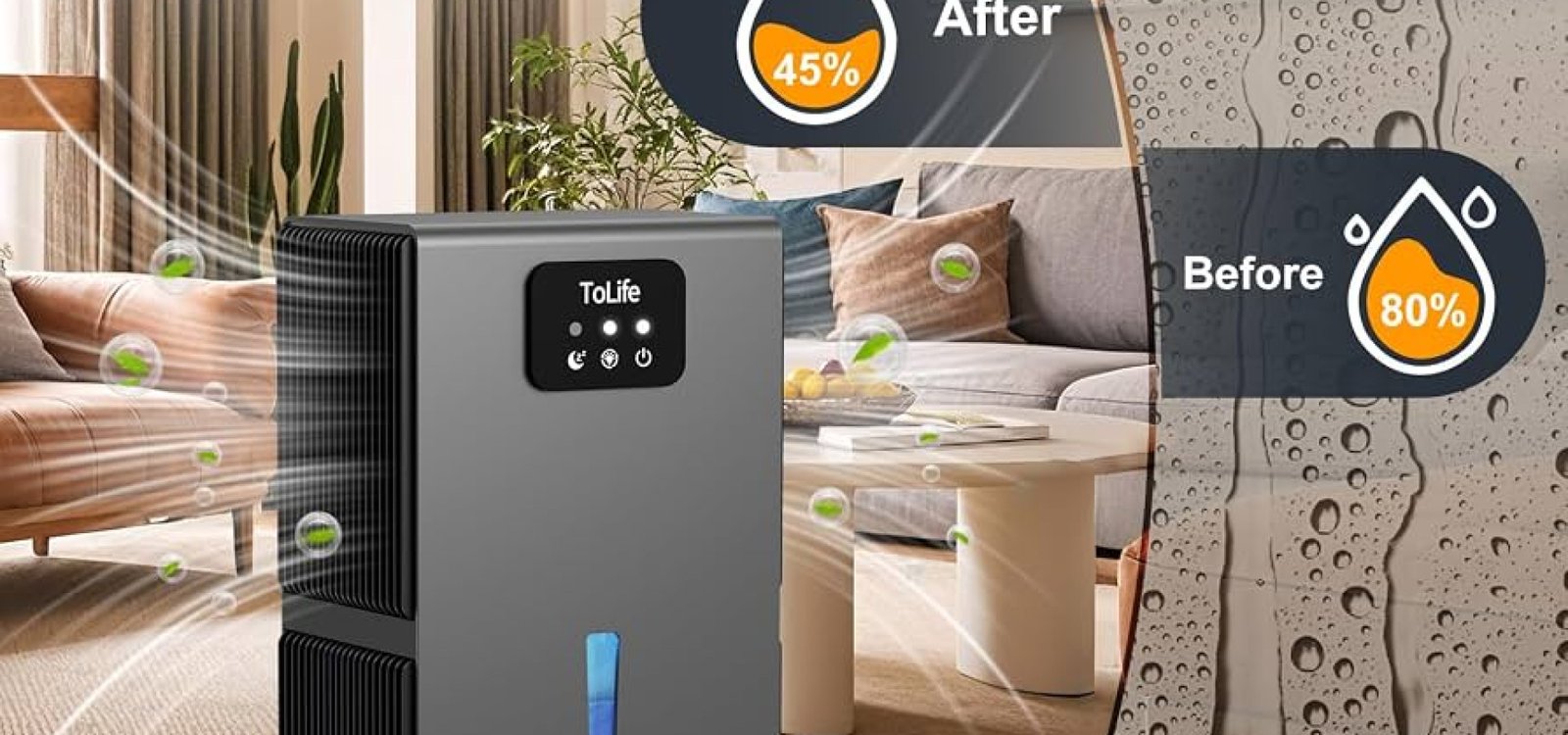
Damp air causes mold, musty smells, warped wood, and dust mite growth. A good dehumidifier fixes that, but only if you pick the right size and type for your space. This guide breaks down what independent testers look for, the top-performing categories of dehumidifiers, and how to match a unit to your home.
Rather than reproduce one publication's exact current product list, which can go stale within months as outlets retest new models, this guide draws on verified testing methodology and findings from multiple independent reviewers so you can shop with confidence regardless of which specific model is trending this season.
Quick Answer
The best dehumidifier for most homes is a 30 to 50 pint unit with an accurate humidistat, a drain hose option, and a low noise rating under 55 decibels. A little more than half of tested dehumidifiers earn an "Excellent" rating in water-removal tests, meaning they actually remove the amount of water their capacity claims. Large basements need 50-pint models; bedrooms and small rooms do better with compact 13 to 20 pint units.
What Makes a Dehumidifier "The Best"?
A few core terms come up in every buying guide and lab test. Knowing them helps you compare units accurately instead of relying on marketing copy.
Background Note: Ideal indoor humidity sits between 30 and 50 percent. Above that range, mold and dust mites start to thrive, which is why humidistat accuracy matters as much as raw pint capacity.
Key Terms to Know
- Pint capacity: How many pints of water the unit removes in 24 hours under lab conditions
- AHAM rating: A capacity standard set by the Association of Home Appliance Manufacturers
- Humidistat: A built-in sensor that cycles the unit on and off to hold a target humidity level, similar to a thermostat
- Continuous drain: A hose attachment that lets the unit run without manual tank emptying
How Are Dehumidifiers Actually Tested?
Real-World vs. Lab Conditions
Manufacturer capacity claims are measured under fixed lab conditions, typically 65°F and 60% relative humidity. Real-world testing accounts for variables charts can't, including room size, ceiling height, ventilation, and whether an HVAC system is running alongside the unit.
Step-by-Step: How Independent Labs Test Units
- Raise a sealed test space to a high humidity level, often above 90%
- Let readings stabilize for several minutes
- Run each unit at top speed for a fixed period, commonly 30 minutes
- Log moisture removal with a calibrated hygrometer
- Repeat the test at least three times per unit for consistency
- Measure noise output in decibels during operation
In one such test set, a compact unit outperformed all other small dehumidifiers while producing just 53.8 decibels of noise, quieter than most larger units.
| Space | Recommended Capacity | Key Feature to Prioritize |
|---|---|---|
| Basement / crawl space | 50 pints | Continuous drain hose, low-temp operation |
| Living room / kitchen | 30-35 pints | Auto humidistat, mobility (wheels) |
| Bedroom | 20-25 pints | Quiet operation, under 50 dB |
| Closet / cupboard | 10-13 pints | Compact size, low power draw |
| Laundry room | 30-50 pints | Dedicated laundry-drying mode |
Did You Know: Many dehumidifier brands are built in the same handful of factories. In 2021, a manufacturer recalled two million units over fire and burn hazards, affecting products sold under Honeywell, Danby, De'Longhi, Ivation, and Idylis branding. In 2023, another major manufacturer recalled 1.56 million units sold under Frigidaire, GE, and Kenmore names.
Pros and Cons of Portable Dehumidifiers
Pros:
- Reduces mold, mildew, and musty odors
- Helps protect wood floors and furniture from warping
- Can shorten laundry drying time indoors
- Lowers conditions that let dust mites and some insects thrive
Cons:
- Needs regular tank emptying unless plumbed to a drain
- Adds to electricity costs, especially large units run continuously
- Can generate noticeable noise on higher fan speeds
- Less effective in unsealed or poorly insulated rooms
Key Takeaways
- Ideal indoor humidity is 30-50%; dust mites and mold thrive above that range
- Match capacity to room size: 50 pints for basements, 20-25 pints for bedrooms, 10-13 pints for closets
- Look for an accurate humidistat and a continuous drain option to reduce maintenance
- Check recall history before buying, since many brands share manufacturing
- Dehumidifiers support pest control indirectly by removing the moisture pests depend on; they aren't a standalone insect treatment
Frequently Asked Questions
How should I get rid of silverfish?
Reduce humidity below 50%, seal cracks and gaps where they enter, remove cardboard and paper clutter, which is a food source for them, and use targeted traps or an insecticide labeled for silverfish in problem areas.
Does a dehumidifier get rid of most insects?
Not directly. A dehumidifier doesn't kill insects, but many pests, including silverfish and dust mites, depend on humid conditions to survive. Lowering humidity makes a space far less hospitable to them over time, which reduces infestations when paired with cleaning and sealing entry points.
How do I prevent silverfish bugs on my bed?
Keep bedroom humidity under 50%, wash bedding regularly in hot water, avoid storing books or paper under the bed, and vacuum frequently. A bedroom-sized dehumidifier of 20-25 pints can help maintain dry conditions overnight.
How do you get rid of silverfish that are literally all over the room?
Start with a deep clean: vacuum corners, baseboards, and closets. Discard infested paper or cardboard. Seal cracks with caulk. Run a dehumidifier continuously to bring humidity down, and apply an appropriate insecticide or diatomaceous earth in cracks and crevices as a follow-up measure.
Can you kill dust mites by running a dehumidifier?
A dehumidifier doesn't kill dust mites directly, but dust mites cannot survive in low humidity. Keeping indoor humidity at or below 50% dehydrates and significantly reduces dust mite populations over time, especially combined with regular washing of bedding in hot water and frequent vacuuming.
Conclusion
Choosing the best dehumidifier comes down to matching capacity to your space, verifying real-world (not just lab-rated) performance, and prioritizing a reliable humidistat. Whether you're drying out a basement or protecting a bedroom from dust mites and silverfish, controlling humidity below 50% is the single most effective step you can take, with the right dehumidifier doing most of the work.
Summary:
- Confirm the pint capacity matches your room size
- Choose a unit with an accurate, tested humidistat
- Check for continuous drain hose compatibility
- Review recall history for the brand and model
- Pair dehumidifier use with cleaning and sealing to control pests like silverfish and dust mites