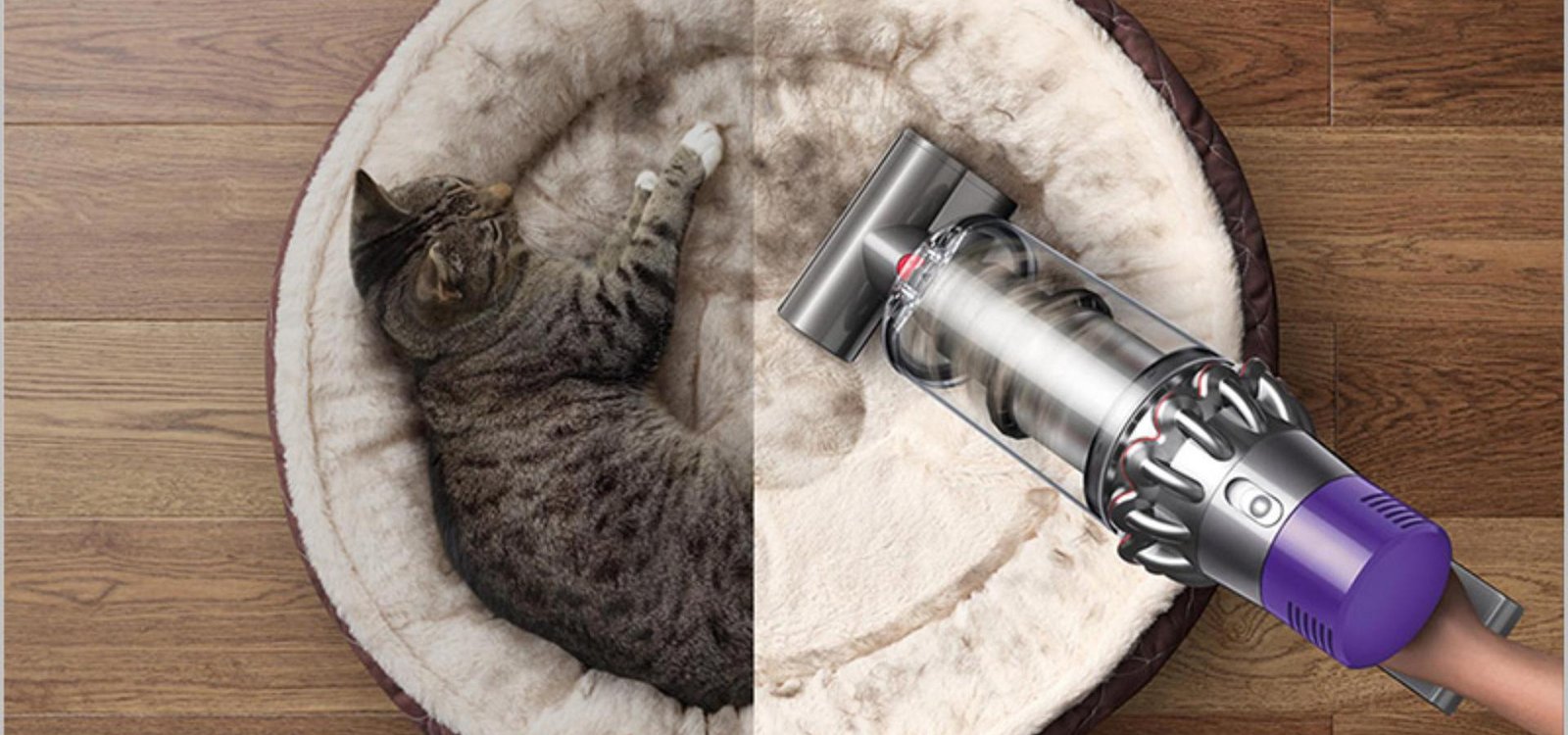
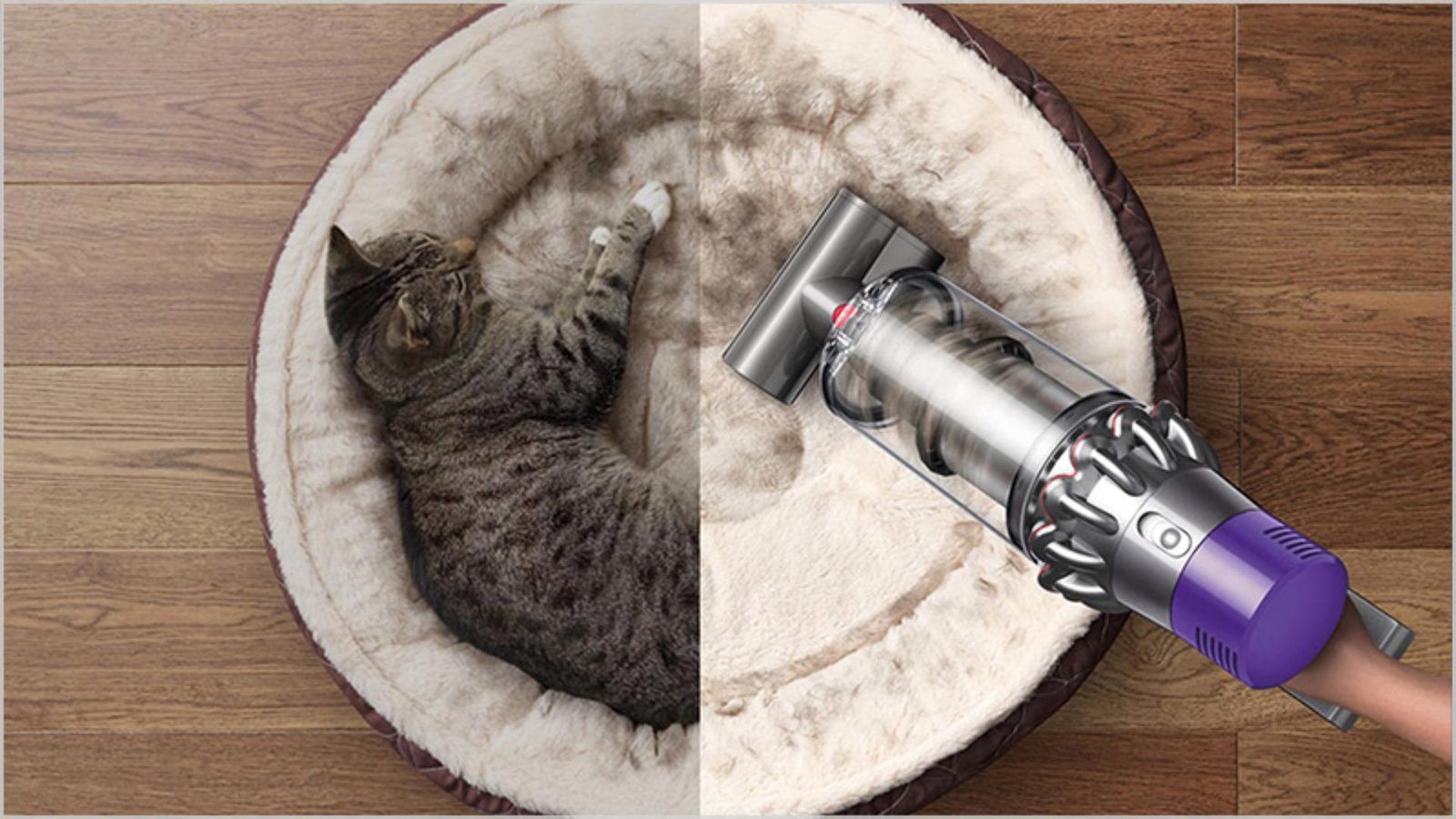
If you share your home with a dog or cat, you already know the struggle: hair on the couch, hair on the carpet, hair somehow on the ceiling fan. Dyson and Shark are the two brands most pet owners compare before buying, but they're built on different philosophies — Dyson chases raw engineering performance, while Shark focuses on practical, wallet-friendly design. This guide breaks down how they actually perform on pet hair, based on independent testing data, so US and UK shoppers can pick with confidence.
Rather than pushing you toward one specific model that may sell out or get discontinued, this guide focuses on the suction, brush roll, and design differences that hold true across each brand's current lineup, so you can compare whatever models you find in stock.
Quick Answer
Dyson wins on raw suction and long-term durability, making it the better pick for heavy shedders, thick carpet, and multi-pet households. Shark wins on value, hair-wrap resistance, and everyday convenience features like its detachable Lift-Away pod. If budget isn't a concern, go Dyson. If you want strong pet-hair performance without the premium price tag, Shark is the smarter buy.
Dyson vs Shark: Core Differences
Both brands dominate the US and UK vacuum market, but they solve the "pet hair problem" in different ways. Knowing the engineering priorities behind each brand helps you read past marketing claims and focus on what actually matters for your home.
Terminology Note: "Air watts (AW)" measures a vacuum's suction power at the point of airflow, not just motor wattage. It's the most reliable number for comparing suction across brands and models, and it's the metric used throughout this guide.
Key Terms to Know
- Air Watts (AW): a standardized measure of suction strength at the vacuum's opening
- Anti-hair-wrap brush roll: Shark's design that prevents hair from tangling around the roller
- Lift-Away: Shark's detachable canister pod that turns an upright into a portable handheld
- HEPA filtration: filters that trap 99.97% of fine particles like dander and dust
- Cordless runtime: how long a battery-powered vacuum runs on a full charge before recharging
What Sets Dyson Apart
Dyson vacuums are engineered around motor power and airflow efficiency. Independent lab testing found Dyson models produce roughly 230 air watts of suction compared to about 180 air watts for comparable Shark models. That gap matters most on medium-to-thick pile carpet, where deeply embedded hair and dander need stronger pull to dislodge.
- Higher suction across most flagship and mid-range models
- Longer typical product warranty on select lines
- HEPA filtration that performs slightly better on premium models, useful for allergy-prone households
- Premium build materials and advanced features like laser dust detection and digital motors
What Sets Shark Apart
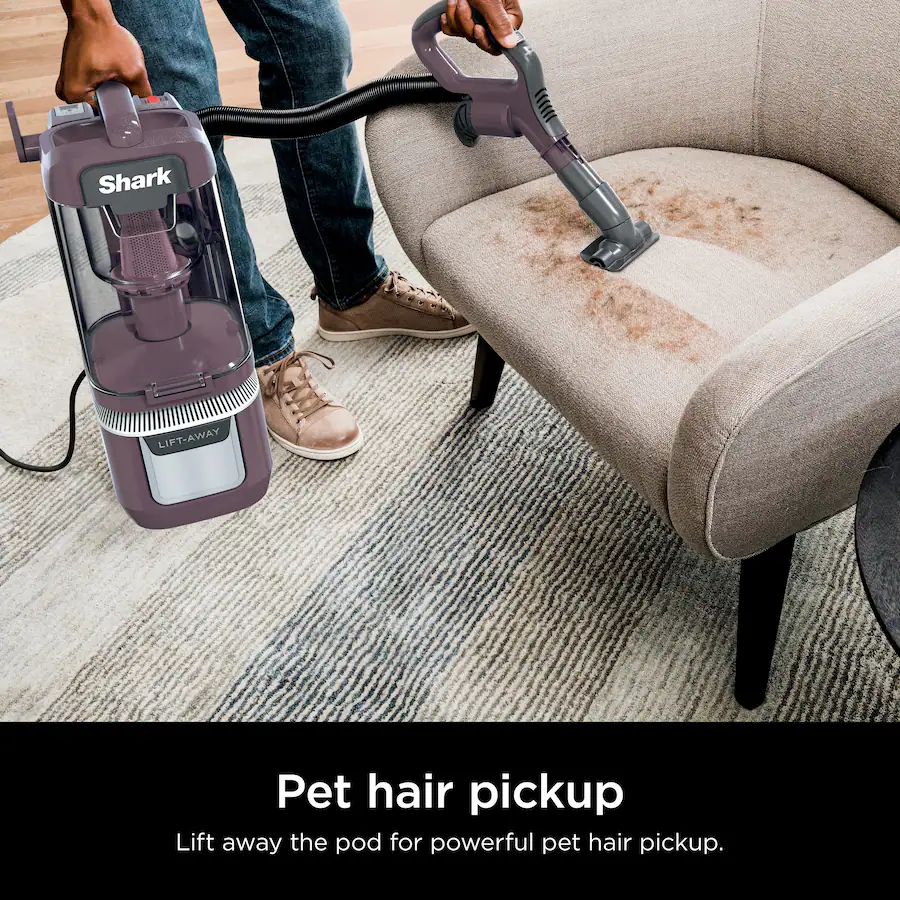
Shark's engineering priority is real-world usability rather than peak lab numbers. Its signature Lift-Away system lets the main body detach from the floor head and convert into a portable canister for stairs, upholstery, and tight corners — effectively removing the need to own a separate handheld vacuum.
- Anti-hair-wrap brush roll technology designed to prevent hair from tangling around the roller
- Generally lower price point across comparable model tiers
- Strong maneuverability and low-profile design that glides easily under furniture
- Good filtration at every price point, not just flagship models
Pet Hair Performance: The Testing Data
Controlled lab testing gives the clearest picture of how these brands handle pet hair specifically.
| Test Metric | Dyson | Shark |
|---|---|---|
| Suction (Air Watts) | ~230 AW | ~180 AW |
| Hair wrapped on brushroll (30g mixed hair test) | 2.1g | 0.3g |
| Sand/debris extraction (200g test) | 187g | 171g |
| Typical runtime (cordless) | ~40 min | ~30–42 min |
| Warranty | Up to 2 years (varies by model) | Up to 5 years on select models |
Two things stand out from this data:
- Suction wins go to Dyson. In a hair-specific test, Dyson's stronger suction extracted about 15% more embedded hair by weight than Shark on medium-pile area rugs.
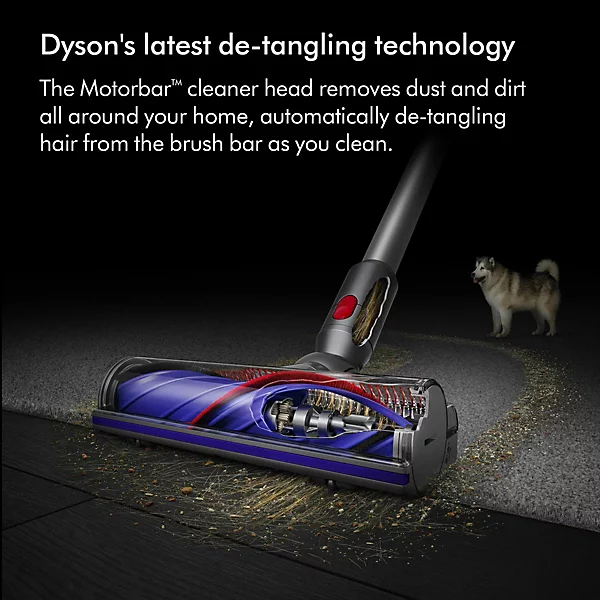
- Brush roll cleanliness goes to Shark. In a separate mixed-hair test on low-pile carpet, the Shark brushroll retained only 0.3g of wrapped hair compared to 2.1g on the Dyson — meaning less time spent cutting hair out of the roller with scissors.
Real-World Example
A tester running both brands for six weeks in a home with a golden retriever and a tabby cat found both vacuums removed embedded pet hair from carpet within two passes, with Dyson pulling ahead only on deep-pile rugs. For most single-pet, mixed-flooring homes, either brand handles daily shedding without issue — the gap widens mainly with heavy-shedding breeds and thicker carpet.
Pros and Cons
Dyson
Pros:
- Stronger suction, especially on thick carpet
- Better filtration on premium models
- Advanced engineering features (laser dust detection, digital motors)
Cons:
- Higher price point
- More hair wraps around the brushroll, requiring manual cleaning
- Shorter typical warranty than Shark's top-tier coverage
Shark
Pros:
- Lower cost for comparable features
- Anti-hair-wrap brush roll reduces maintenance
- Lift-Away portability doubles as a handheld
- Longer warranty on select models
Cons:
- Lower peak suction on thick carpet and rugs
- Filtration on entry-level models trails Dyson's flagship HEPA systems
Step-by-Step: How to Choose the Right One for Your Home
- Identify your flooring mix. Mostly hardwood or low-pile carpet → either brand performs well. Thick or medium-pile carpet → lean Dyson.
- Count your pets and shedding level. Multiple pets or heavy shedders (huskies, retrievers) → Dyson's suction edge matters more.
- Check your budget tier. Entry-level Shark models overlap with Dyson's refurbished or older-generation options, so compare like-for-like pricing.
- Decide if portability matters. Need a vacuum for stairs and upholstery too? Shark's Lift-Away pod solves this without a second appliance.
- Factor in maintenance time. If you dislike untangling hair from brush rolls, Shark's anti-wrap design saves recurring effort.
Common Mistakes to Avoid: Buying on brand name alone without checking your specific flooring and pet-shedding level. Assuming attachments are interchangeable between brands — Dyson and Shark use proprietary, non-cross-compatible attachment systems, so always confirm included tools before buying.
Key Takeaways
- Dyson delivers roughly 30–50% more suction than comparable Shark models, according to independent lab testing
- Shark's anti-hair-wrap brushroll technology significantly reduces hair tangling versus Dyson
- Both brands offer dedicated pet-hair tools and HEPA-level filtration options
- Shark generally costs less and offers longer warranties on select models
- The right choice depends on your carpet type, pet-shedding level, and budget — not brand loyalty alone
Frequently Asked Questions
What is the best vacuum for pet hair?
Between the two brands, Dyson is generally the best choice for pet hair if you have thick carpet or heavy-shedding pets, thanks to its stronger suction. Shark is the best choice if you want strong performance with an easier-to-clean brushroll at a lower price. Beyond these two, the "best" vacuum ultimately depends on your flooring type, pet breed, and budget.
What is the best rated vacuum cleaner for pet hair?
Top-rated pet-hair vacuums from both brands include Dyson's Ball Animal and V15 series and Shark's Stratos and Rotator Powered Lift-Away TruePet line. Both are consistently rated highly by independent testers for pet hair pickup, though Dyson models tend to edge out Shark on raw suction scores while Shark scores higher on ease of maintenance.
What is the best vacuum cleaner for pet hair overall?
For most households, a corded or cordless upright from either brand handles daily pet hair well. If thick carpet and heavy shedding are your main concern, Dyson's flagship models are the top overall performers. If value and convenience matter more, Shark's mid-range and Lift-Away models are hard to beat.
What is the best robot vacuum for pet hair?
Both Dyson and Shark also make robot vacuums for pet hair, though Shark has a wider robot lineup at more accessible prices. In testing, Dyson's robot models extracted about 15% more embedded hair by weight than Shark's on medium-pile area rugs, but Shark's robot vacuums are a strong budget-friendly alternative for daily upkeep between deeper cleans.
What is the best automatic vacuum for pet hair?
"Automatic" vacuum typically refers to robot vacuums that clean on a schedule without manual input. Dyson's automatic models offer stronger suction for embedded pet hair, while Shark's automatic vacuums are generally more affordable and easier to maintain over time, making them a popular pick for pet owners on a budget.
Conclusion
There's no universal winner in the Dyson vs Shark debate — only the better fit for your home. Choose Dyson if you have thick carpet, multiple pets, or heavy shedders and don't mind paying a premium for stronger suction. Choose Shark if you want strong everyday pet-hair performance, easier brushroll maintenance, and better value for money.
Summary:
- Dyson: stronger suction, better for thick carpet and heavy shedders, higher price
- Shark: better hair-wrap resistance, more affordable, added portability via Lift-Away
- Match your choice to flooring type, pet shedding level, and budget
- Always verify attachment compatibility before purchasing