
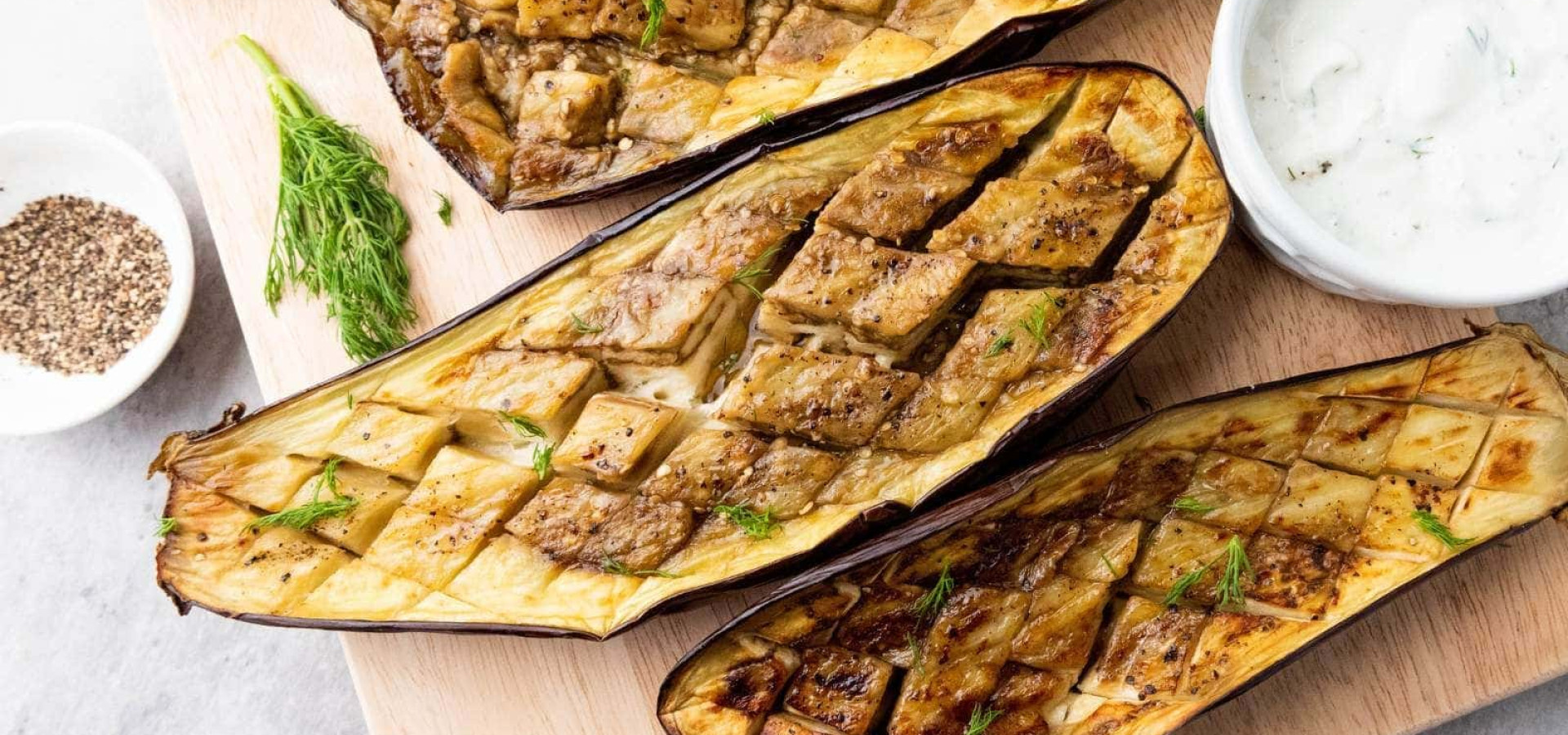
There's a reason so many home cooks give up on eggplant halfway through cooking it. You slice it up, throw it in the oven, and twenty minutes later you're staring at something either rubbery and bitter or a soggy, oil-soaked mess that falls apart on the fork. It's not your fault — eggplant is one of the few vegetables that punishes shortcuts. But once you understand what's actually happening inside it, roasting it properly becomes almost foolproof.
Whether you're working with eggplants from the supermarket or the ones you grew yourself this summer, this guide walks through the exact method that gets consistently golden, tender, never-soggy roasted eggplant — plus the small mistakes that ruin it for most people, and how to fix them.
Why Does Roasted Eggplant Turn Out Soggy or Bitter?
Eggplant is roughly 90% water, and its flesh is naturally spongy — think of it as a network of tiny air pockets rather than solid vegetable matter. Those air pockets are exactly why eggplant soaks up oil like a sponge and why, if you skip a key preparation step, it releases all that trapped water back out in the oven, steaming instead of roasting.
The bitterness people complain about comes from compounds called cucurbitacins, concentrated mostly near the skin and seeds. Older eggplants and larger varieties tend to have more of it. The good news is that both problems — sogginess and bitterness — are solved by the same simple step: salting.
Expert Tip: Modern eggplant varieties are bred to be far less bitter than they were decades ago, so if you're using young, firm eggplants, you can often skip a long salting rest — but salting still makes a real difference to texture, so it's worth the extra 20 minutes.
How to Salt Eggplant Before Roasting (And Why It Works)
Slice your eggplant into rounds or planks about 1.5–2cm thick, lay the pieces flat on a wire rack or a few layers of kitchen paper, and sprinkle both sides generously with salt. Leave them for 20–30 minutes. You'll actually see beads of moisture forming on the surface — that's excess water being drawn out through osmosis, taking a good portion of the bitterness with it.
Once the time is up, pat each piece completely dry with kitchen paper before it goes anywhere near the oven. This single step is the difference between eggplant that roasts and eggplant that steams — dry surfaces caramelise, wet surfaces don't.
The Best Method for Roasting Eggplant in the Oven
Preheat your oven to 220°C (200°C fan / 425°F) — hotter than you might expect, but this is what gives eggplant a golden, slightly crisp exterior instead of a pale, steamed one. A lower oven simply doesn't drive off moisture fast enough.
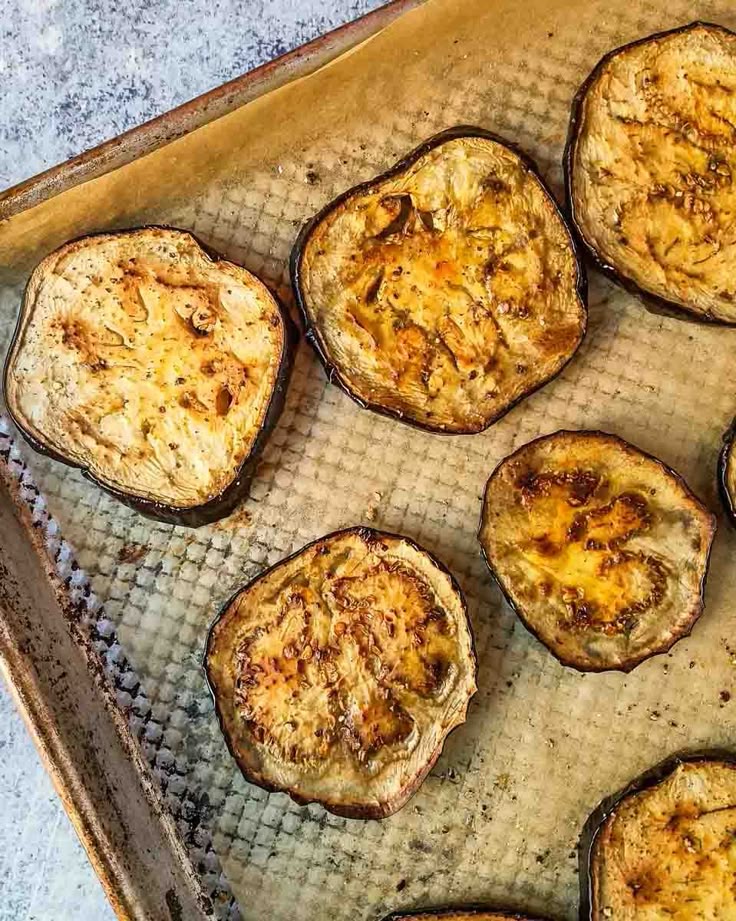
Arrange your salted, dried eggplant pieces in a single layer on a baking tray lined with parchment, making sure none of them overlap or touch. Overcrowding traps steam between the pieces, which is one of the most common reasons home-roasted eggplant turns out soft instead of crisp — if your tray looks full, use two trays instead of one.
Brush each side lightly with olive oil rather than drizzling it over the top — eggplant will absorb as much oil as you give it, so a light, even brushing gives you flavour and browning without turning the tray into a pool of oil. Season with salt, pepper, and a scattering of dried oregano or thyme if you like.
Roast for 25–30 minutes, flipping the pieces once at the halfway mark. You're looking for a deep golden-brown colour on both sides and flesh that feels tender all the way through when pierced with a fork — not mushy, not firm in the centre.
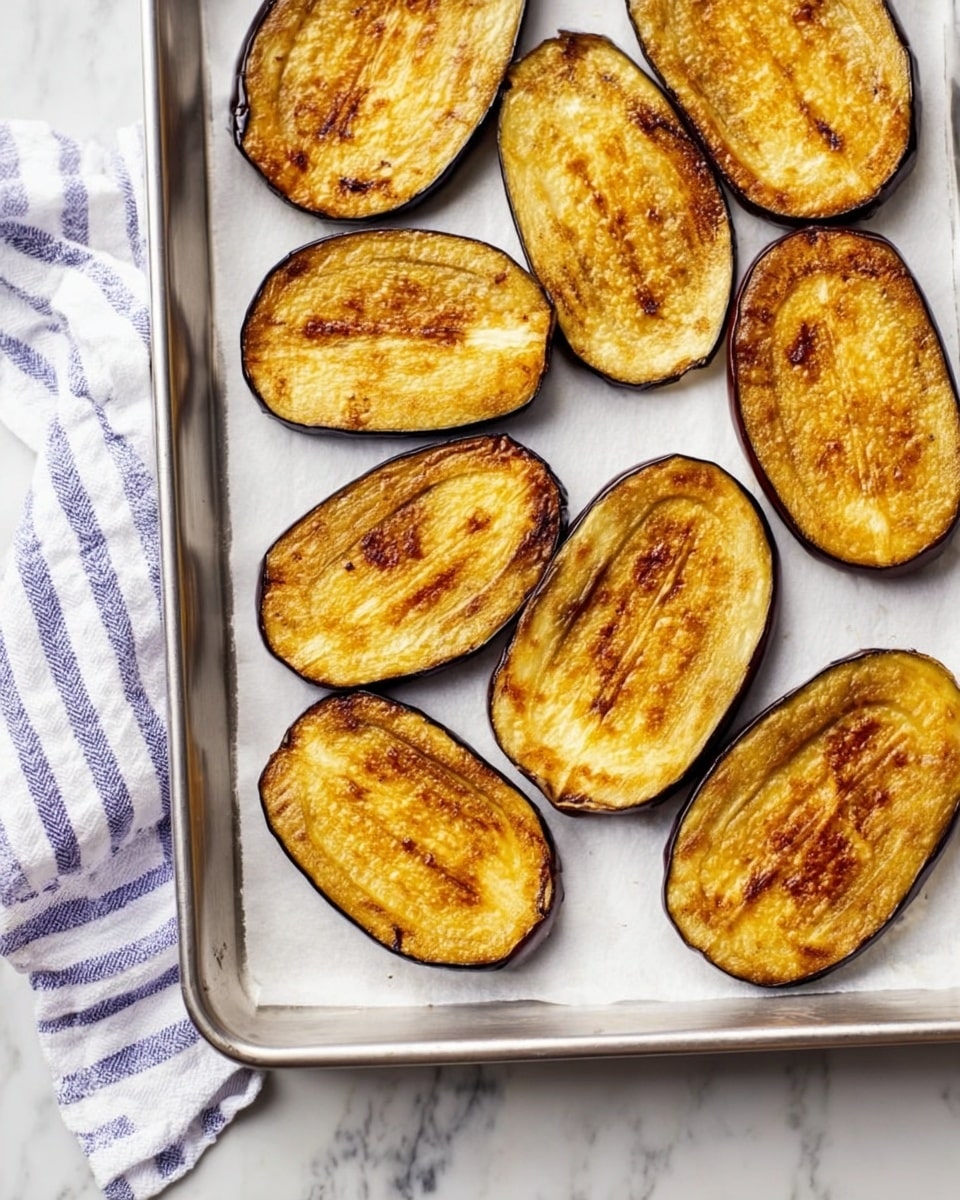
Did You Know? Placing the tray on the oven's lowest shelf, closer to the heat source, encourages better browning on the underside of each slice — restaurant kitchens often use this trick to get colour without extra oil.
Should You Roast Eggplant in Slices or Cubes?
This depends entirely on what you're making next. Rounds or planks work best when eggplant is the centrepiece of the dish — layered into parmigiana, topped with tomato and cheese, or served as a simple side. The larger surface area holds up well under sauce without disintegrating.
Cubes, roughly 2–3cm, are better suited to dishes where eggplant is mixed through something else — pasta, curries, grain bowls, or ratatouille. Cubes roast faster (around 20–25 minutes) and give you more caramelised edges relative to their size, which adds flavour throughout the dish rather than concentrating it on two flat sides.
How to Store and Reheat Roasted Eggplant
Roasted eggplant keeps well in an airtight container in the fridge for up to four days. It also freezes surprisingly well once fully cooled — lay pieces flat on a tray to freeze individually first, then transfer to a freezer bag, so they don't clump together into one solid block.
To reheat without losing that roasted texture, avoid the microwave, which brings back the sogginess you worked to avoid in the first place. A few minutes in a hot oven or air fryer at 200°C will re-crisp the edges and warm it through properly.
Cooking Eggplant You've Grown Yourself
If your eggplants came from your own garden rather than the supermarket, you're already ahead — homegrown eggplants picked at the right stage tend to be sweeter and less bitter than shop-bought ones, which are often picked earlier and travel long distances before they reach the shelf. Look for a glossy, taut skin and firm flesh that springs back slightly when pressed; a dull skin or a fruit that feels light for its size usually means it's overripe and will taste more bitter.
Smaller, younger eggplants generally need little to no salting at all, since most of the bitterness compounds develop as the fruit matures. If you've had a good harvest this season, roasting is one of the simplest ways to use up several at once — and any extra can be frozen for the months ahead.
Final Thoughts
Roasted eggplant has a reputation for being tricky, but almost every problem people run into comes down to two things: not drawing out the excess moisture beforehand, and crowding the tray. Fix those two habits, roast hot, and you'll get consistently golden, tender eggplant every time — no special equipment, no complicated technique, just a bit of patience with the salting step.
Once you've got the basic method down, it becomes one of the most flexible things you can put in the oven — a side dish on its own, the base of a parmigiana, or folded through pasta, curries, and salads. Master it once, and you'll find yourself reaching for it far more often than you'd expect.
Frequently Asked Questions
Do you have to salt eggplant before roasting?
It's not strictly required, especially with modern, less-bitter varieties, but salting for 20–30 minutes draws out excess moisture and any bitterness, which noticeably improves both texture and flavour. If you're short on time, even a quick 10-minute salt and pat-dry is better than skipping it entirely.
What temperature is best for roasting eggplant?
220°C (200°C fan / 425°F) gives the best balance of a golden, caramelised exterior and a fully tender centre. Lower temperatures tend to steam the eggplant rather than roast it, leaving it pale and soft instead of crisp at the edges.
How long does eggplant take to roast in the oven?
Sliced eggplant (1.5–2cm thick) takes 25–30 minutes at 220°C, flipped once halfway through. Cubed eggplant cooks slightly faster, usually 20–25 minutes, since the smaller pieces have more surface area exposed to the heat.
Why is my roasted eggplant still soggy?
The two most common causes are skipping the salting-and-drying step, and overcrowding the baking tray so the pieces steam each other instead of roasting individually. Make sure every piece has space around it, and pat the eggplant fully dry before it goes in the oven.
Can you roast eggplant without oil?
Yes, though the texture will be slightly different — without oil, the surface won't caramelise as deeply and can dry out more easily. A light brushing rather than a heavy drizzle gives the best result while keeping oil use to a minimum.
Do you need to peel eggplant before roasting?
No — the skin is edible, holds the flesh together during cooking, and softens fully once roasted. Peeling is only necessary for very large or older eggplants with noticeably tough or bitter skin.
Can you freeze roasted eggplant?
Yes. Let it cool completely, freeze pieces flat on a tray until solid, then transfer to a freezer bag. It will keep for up to three months and reheats well in the oven or air fryer for a few minutes.