

Choosing a kitchen sink is one of those decisions that feels small until you're standing at a showroom counter facing a dozen options. Yet the sink you pick affects daily cooking, cleanup, and even resale value.
This guide breaks down size, material, style, and installation so you can choose with confidence, whether you're shopping in the US or the UK, drawing on current market trends and independent product comparisons rather than a single brand's marketing copy.
Quick Answer
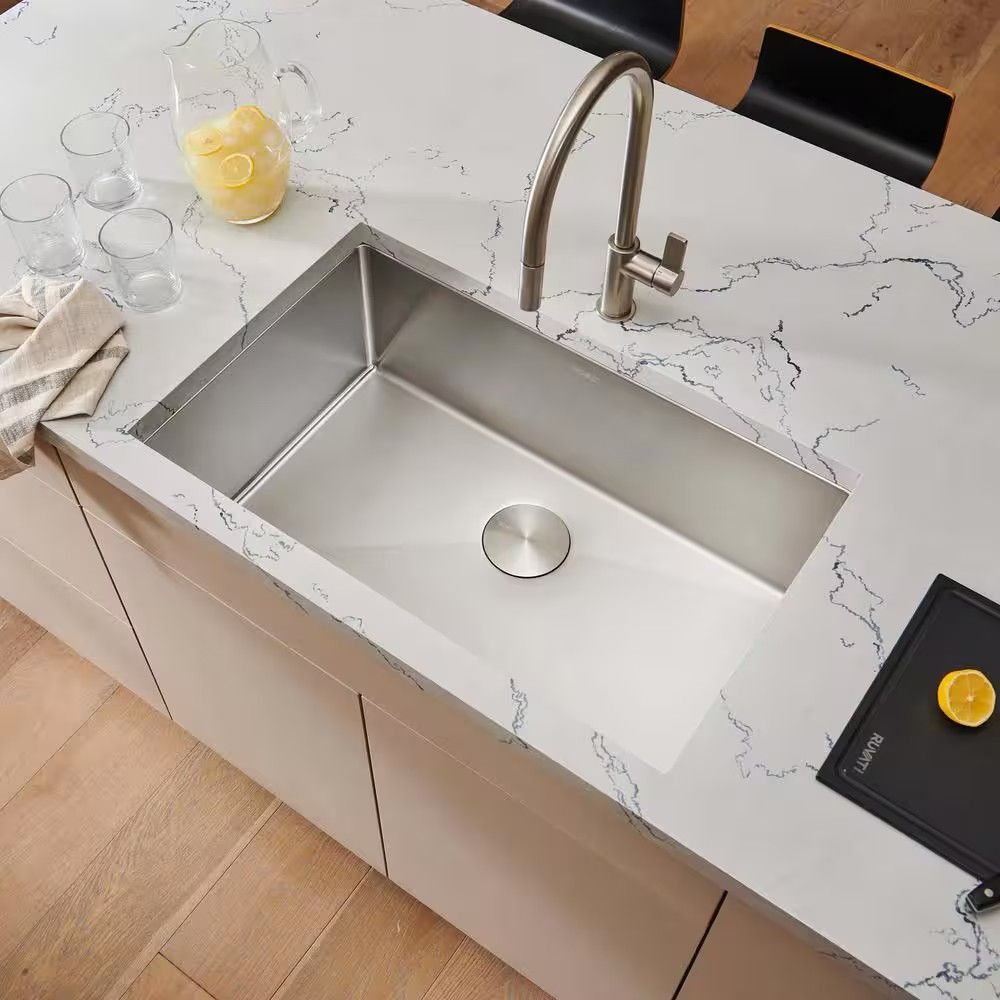
For most households, an 18-gauge (US) or 1.0mm-1.2mm (UK) stainless steel undermount sink between 30-33 inches (US) or 80-100cm (UK) wide offers the best balance of durability, cost, and easy maintenance. If you want a design statement, granite composite in matte black is the leading alternative, valued for its scratch and heat resistance.
Understanding Kitchen Sink Sizes
A few core terms come up in every buying guide and product spec sheet. Knowing them helps you compare sinks accurately instead of relying on listing photos alone.
Background Note: Most US base cabinets run 33-36 inches wide, which typically fits a 30-33 inch sink. UK base units are usually 600-1000mm, with single bowl sinks around 500-600mm and 1.5 bowl sinks up to 1000mm.
Key Terms to Know
- Bowl configuration: Single, double, or 1.5 bowl (one large, one small basin)
- Gauge: The thickness of stainless steel; lower numbers mean thicker, more durable metal
- Reveal: How the sink edge sits relative to the counter (flush, raised, or undermount)
- Workstation: A sink built with integrated ledges for cutting boards, racks, and colanders
Step-by-Step: How to Measure Your Space
- Measure the base cabinet's inside width
- Subtract roughly 2-3 inches (5-7cm) per side for the countertop overhang and cabinet frame
- Check cabinet depth to confirm the sink's front-to-back measurement fits
- Note existing plumbing and faucet hole positions if the countertop isn't being replaced
- Confirm the cutout size with your installer before ordering a countertop
Choosing the Right Material
Stainless steel still leads global adoption, holding roughly 40% of market share thanks to its durability and corrosion resistance, while granite composite has become the fastest-growing challenger, prized for its premium appearance and long-term wear.
| Material | Durability | Heat Resistance | Noise Level | Typical Cost |
|---|---|---|---|---|
| Stainless Steel (16-18 gauge) | High, resists impact | Very high | Louder unless dampened | $ |
| Granite Composite | Very high, scratch-resistant | High (up to ~536°F/280°C) | Quiet | $$ |
| Fireclay | High, chip-resistant glaze | High | Quiet | $$$ |
| Cast Iron (enameled) | High, enamel can chip | High | Quiet | $$$ |
| Copper | Moderate, develops patina | Moderate | Quiet | $$$ |
Did You Know: Granite composite sinks are typically made from a blend of roughly 80% granite powder bound with acrylic or polyester resin, which is what gives them a stone-like matte finish while still being lighter and easier to shape than solid stone.
Pros and Cons by Material
Stainless Steel — Pros:
- Affordable and widely available
- Lightweight, straightforward to install
- Hygienic and easy to sanitize
Stainless Steel — Cons:
- Can dent under heavy impact
- Shows water spots and fingerprints
- Can be noisy without sound-dampening pads
Granite Composite — Pros:
- Scratch and stain resistant
- Quiet in daily use
- Wide range of matte colors
Granite Composite — Cons:
- Heavier, may need cabinet reinforcement
- Higher upfront cost
Sink Styles Explained
Undermount Sinks
Mounted beneath the countertop for a seamless look, undermount sinks suit solid-surface counters like quartz or granite. Wiping crumbs directly into the sink is easier since there's no rim to catch debris.
Farmhouse (Apron-Front) Sinks
These extend past the cabinet face with an exposed front panel. Farmhouse sinks remain a steady design trend in traditional and modern-farmhouse kitchens, and typically require custom cabinetry.
Drop-In (Top-Mount) Sinks
The most budget-friendly and DIY-accessible option. A visible rim sits on top of the countertop, which also makes replacement simpler without disturbing the counter.
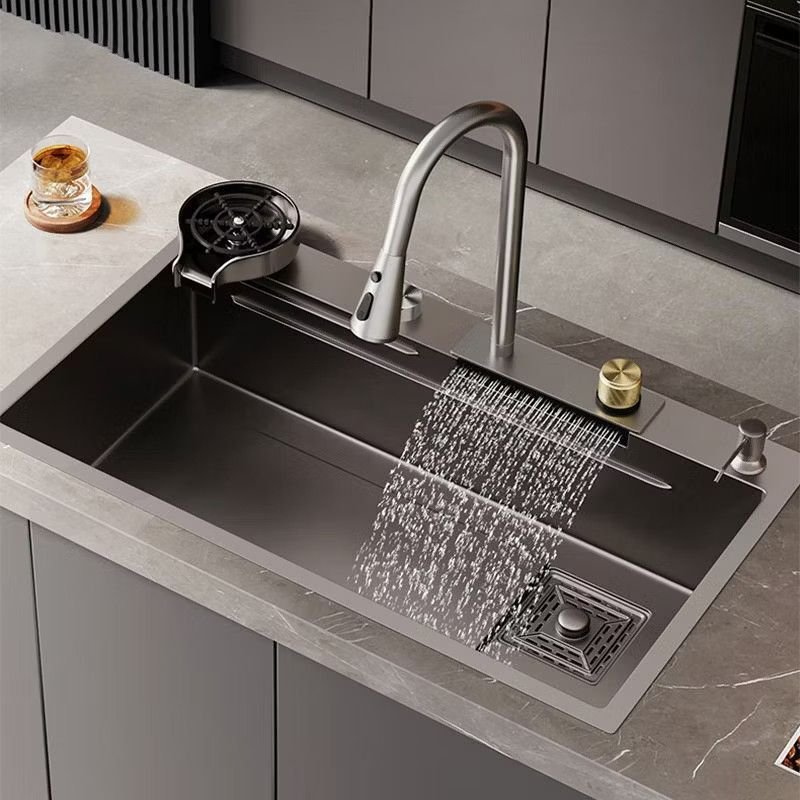
Workstation Sinks
A newer category built with integrated ledges for cutting boards, drying racks, and colanders, effectively turning the sink into a mini prep station.
Step-by-Step: How to Choose Your Sink
- Measure your cabinet and countertop cutout to establish a size range
- Decide on bowl configuration based on cooking habits
- Pick a material based on budget, heat resistance, and noise priorities
- Choose a mounting style that matches your countertop material
- Confirm faucet hole compatibility if keeping your existing faucet
- Check cabinet support, especially for heavier materials like granite composite or cast iron
Key Takeaways
- Match sink size to your cabinet width, leaving room for the countertop edge
- Stainless steel remains the most widely used material; granite composite is the fastest-growing alternative
- Undermount sinks suit solid-surface counters; drop-in sinks work with any counter and install easiest
- Heavier materials may require cabinet reinforcement, so confirm this before purchase
- Workstation sinks add functional prep space but cost more upfront
Frequently Asked Questions
What is the standard kitchen sink size in the US?
Most standard sinks range from 30-33 inches wide to fit a typical 33-36 inch base cabinet.
Is granite composite better than stainless steel?
Neither is universally better. Granite composite offers superior scratch resistance and quieter operation, while stainless steel is generally more affordable and available in a wider range of sizes.
Can I install an undermount sink with a laminate countertop?
It's not recommended. Undermount sinks need a solid-surface counter like quartz, granite, or solid wood to properly support the exposed edge.
Do farmhouse sinks require special cabinets?
Yes, farmhouse sinks typically need custom or modified base cabinets to accommodate the exposed front panel.
How do I know if my cabinet can support a heavy sink?
Check with your installer or a contractor before purchase. Heavier materials like granite composite, fireclay, or cast iron may require additional support rails or reinforced cabinet bracing.
Conclusion
Picking the right kitchen sink comes down to matching size to your cabinet, choosing a material that fits your cooking habits and budget, and selecting a mounting style compatible with your countertop. Whether you land on a classic stainless steel undermount or a modern granite composite workstation sink, measuring carefully and confirming cabinet support upfront will save you time and money during installation.
Summary:
- Measure cabinet width and depth before choosing a size
- Stainless steel leads in adoption; granite composite is the fastest-growing premium alternative
- Undermount suits solid countertops; drop-in is the easiest DIY option
- Farmhouse sinks need custom cabinetry; workstation sinks add built-in prep functionality
- Always confirm cabinet support for heavier sink materials