Choosing the right curtain hardware and drapery rods changes how a room looks and functions. The wrong rod sags under heavy fabric. The wrong bracket pulls out of drywall. The wrong length makes a window look smaller than it is. This guide covers everything a homeowner, interior designer, or procurement team in the US or UK needs to select, size, and install curtain hardware correctly.
Rather than pointing you to one retailer's current lineup, which rotates stock and goes out of date within months, this guide focuses on the sizing rules, materials, and installation steps professional installers actually use, so you can evaluate any rod or bracket set you come across.
Quick Answer
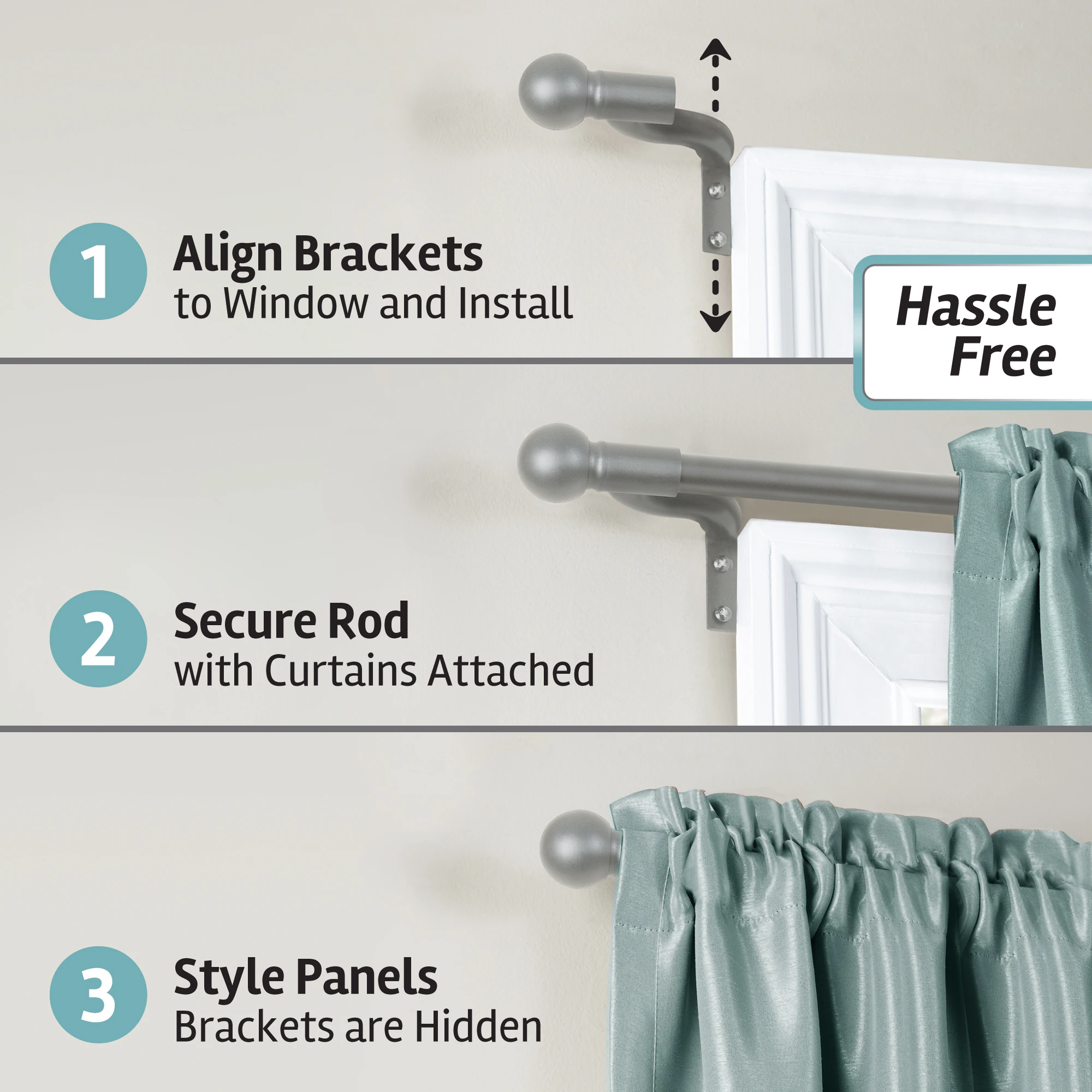
Curtain hardware includes rods, rings, brackets, finials, and tracks that support drapery panels. For most windows, choose a rod rated for your fabric weight, extend it 4 to 10 inches beyond the window frame on each side, and mount brackets into wall studs or use heavy-duty anchors. Standard rod diameters range from 5/8 inch for light cafe curtains to 1.5 inches or more for heavy blackout drapes.
What Is Curtain Hardware?
Curtain hardware refers to the physical components that hold drapery panels in place and allow them to open and close. A few core terms come up in nearly every product listing, and knowing them helps you compare options accurately instead of relying on marketing copy alone.
Terminology Note: In the UK, "curtain poles" is the more common term, while US retailers typically say "curtain rods" or "drapery rods." Both describe the same core hardware function.
Key Terms to Know
- Rod/pole: The horizontal bar the curtain hangs from
- Rings and clips: Connect fabric to the rod
- Brackets: Mount the rod to the wall or ceiling
- Finials: Decorative end caps
- Tracks: Concealed channel systems, common in the UK for pleated headings
- Tiebacks/holdbacks: Secure open curtains to the side
What Factors Should I Consider for Buying Curtain Rods?
Match the Rod to Fabric Weight
Lightweight sheers need only a thin rod, around 5/8 to 3/4 inch. Medium-weight cotton or linen drapes need 1 to 1.25 inch rods. Heavy blackout, velvet, or lined drapery requires 1.5 to 2 inch rods or a double-rod system to prevent sagging.
Consider Wall Type Before Buying Brackets
- Drywall/plasterboard only: use toggle anchors rated for at least 20 lbs per bracket
- Studs/joists available: screw directly in for maximum support
- Tile or masonry: use masonry anchors and a hammer drill
The five factors that matter most before purchasing are window width and height, fabric weight, wall material, style goals, and how often the curtains will be opened and closed. Undersized hardware chosen for looks rather than fabric weight is one of the most common installation complaints reported to window covering manufacturers.

| Room | Recommended Hardware | Why |
|---|---|---|
| Living room | Decorative rod with finials | Visible, adds style |
| Bedroom | Blackout-compatible double rod | Layer sheer + blackout |
| Kitchen | Cafe rod, tension rod | Lightweight, easy clean |
| Bay window | Bendable rod or track system | Follows window curve |
| Office/commercial | Track system with wand control | Discreet, functional |
Pros and Cons of Common Rod Types
Traditional Rod With Rings
Pros:
- Easy to install
- Wide style range
- Simple to swap fabric panels
Cons:
- Rings can be noisy
- May sag over wide spans with heavy fabric
Track Systems
Pros:
- Smooth glide
- Supports heavy pleated drapes
- Hidden from view
Cons:
- Higher cost
- More complex installation
Tension Rods
Pros:
- No drilling required
- Ideal for renters
Cons:
- Limited weight capacity
- Not suitable for wide windows
Tips for Buying and Hanging Double Curtain Rods
Double rod systems let you layer a sheer curtain with a heavier blackout or decorative panel, a popular choice for bedrooms and living rooms.
Step-by-Step Installation
- Measure window width and add 8 to 12 inches total for stack-back space
- Choose a double-rod bracket set, with a front rod for the decorative panel and a back rod for the sheer
- Mark bracket positions 4 to 6 inches above the window frame
- Use a level to confirm both brackets sit evenly
- Anchor into studs where possible, or use toggle anchors otherwise
- Install the back (inner) rod first, then the front rod
- Hang sheers on the inner rod and drapery panels on the outer rod
- Test opening and closing before final tightening
Common Mistakes to Avoid: Mounting both rods at the same height causes fabric to overlap awkwardly. Standard anchors often fail under heavy blackout fabric. Skipping stack-back space blocks part of the window even when curtains are fully open.
How Far Should Curtain Rods Extend Past the Window?
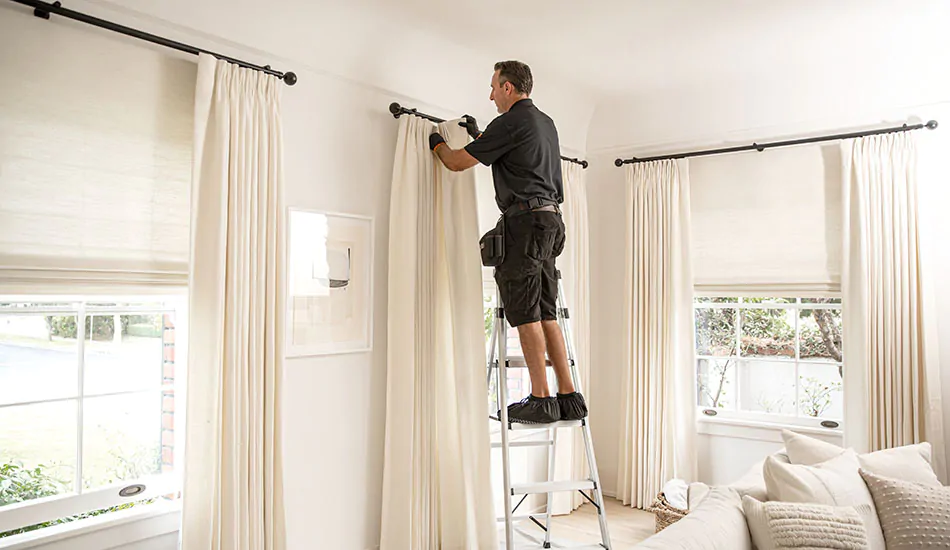
A widely used interior design rule is to extend the rod 4 to 10 inches beyond each side of the window frame. This allows curtains to stack fully open, letting more natural light in and making the window appear wider.
- Narrow windows: 4-6 inches extension
- Standard windows: 6-8 inches extension
- Wide or floor-to-ceiling windows: 8-10+ inches, or a track system for full stack-back
Mounting height matters too. Hang the rod 4 to 6 inches above the frame for a standard look, or closer to the ceiling to visually elevate a room with lower ceilings.
What Are Some Ways to Decorate a Room With Curtains?
- Use floor-length curtains to make ceilings look taller
- Layer sheers with blackout panels for light control and privacy together
- Choose bold finials as a decorative focal point
- Match curtain color to wall trim for a cohesive look, or contrast for drama
- Use tiebacks to frame natural light during the day
- Install a track system in commercial or minimalist spaces for a clean, hardware-free look
How Can You Make a Curtain Pole?
For a budget or DIY option, a curtain pole can be made from a wooden dowel or closet rod cut to length, two matching brackets, a wood finish or stain, and optional finials.
- Cut a wooden dowel or closet rod to the needed length
- Sand the surface smooth
- Apply paint, stain, or finish to match the room
- Attach finials with wood glue or threaded screws at each end, if desired
- Mount two matching brackets at the correct height
- Rest the finished pole across the brackets
This approach works well for lightweight to medium curtains but is not recommended for heavy blackout fabric without reinforced brackets.
Key Takeaways
- Match rod diameter and bracket strength to fabric weight, not just window size
- Extend rods 4 to 10 inches past the window frame for proper stack-back
- Mount into wall studs when possible, or use rated anchors otherwise
- Double rods allow layering sheers with heavier drapery
- Track systems suit heavy pleated drapes and commercial spaces
- DIY curtain poles work for light-to-medium fabric using a dowel and brackets
Frequently Asked Questions
What factors should I consider for buying curtain rods?
Window size, fabric weight, wall material, style, and whether the curtains will be opened and closed daily all affect which rod and bracket set is right for a window.
What are tips for buying and hanging double curtain rods?
Choose a bracket set designed for two rods, install the inner rod before the outer rod, allow extra stack-back space in your measurements, and anchor into studs for heavier fabric.
How far should curtain rods extend past the window?
Typically 4 to 10 inches on each side, depending on window width and how much stack-back space is needed when the curtains are open.
What are some ways to decorate a room with curtains?
Use floor-length panels, layer sheers with blackout fabric, choose statement finials, and use tiebacks to frame light during the day.
How can you make a curtain pole?
Cut a wooden dowel to length, sand and finish it, attach brackets, and mount it at the desired height. This works well for light-to-medium fabric.
Conclusion
Curtain hardware is a functional decision as much as a style one. Selecting the correct rod diameter, bracket strength, and mounting width prevents sagging, wear, and premature replacement, while the right extension and height make a window feel larger and a room feel more finished. Whether outfitting a single bedroom or specifying hardware across multiple properties, matching hardware to fabric weight and wall type is the single most reliable way to get lasting results.
Summary:
- Rod diameter should match fabric weight
- Extend rods 4-10 inches past the window frame
- Anchor into studs or use rated wall anchors
- Double rods enable sheer + blackout layering
- Track systems suit heavy or commercial installations
- DIY poles are a viable option for light-to-medium curtains