Most people trying to make their garden look "expensive" reach for the same shortcuts first, a new patio, string lights, maybe an outdoor sofa. But walk through any garden that actually reads as high-end, and it's rarely the furniture doing the work. It's the plants: their shape, their structure, and how deliberately they've been placed.
This list covers 15 plants that consistently show up in luxury garden design, from clipped topiary to statement trees, along with realistic care notes so you know what you're actually signing up for. If you're also working with a smaller water budget, pair a few of these with the ideas in our gravel garden guide, several plants here, like lavender and ornamental grasses, thrive in that low-water setup too.
1–3. Structural Plants That Do the Heavy Lifting
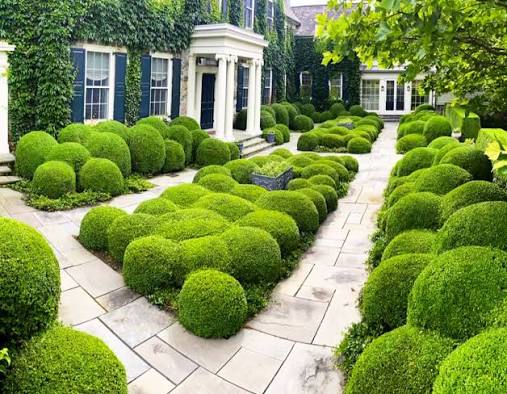
Clipped boxwood topiary is probably the single most reliable way to make a garden look designed rather than accidental. Balls, cones, and cubes planted in matching pairs at an entrance or along a path instantly read as intentional. Boxwood is slow-growing, which is part of its appeal, expect to trim it twice a year, once in late spring and again in late summer, to keep shapes crisp.
Yew hedging plays a similar role at a larger scale, dense, dark green walls that frame a garden the way a picture frame sets off a painting. It's slower to establish than faster-growing hedges like leylandii, but that density and depth of color is exactly what gives older estate gardens their look.
Standard tree roses, roses grafted onto a tall, bare stem so the blooms sit at eye level in a rounded head, add height and formality without the bulk of a full shrub. Planted in threes or fours along a border, they create the kind of rhythm you see in formal European gardens. Brands like David Austin specialize in English rose varieties bred for exactly this kind of statement planting.
Expert Tip: Stake standard roses at planting time, not after. Their top-heavy shape makes them prone to wind damage in the first year before the root system fully establishes.
4–6. Mediterranean Plants for a Sun-Warmed, Sculptural Look
Potted olive trees have become shorthand for high-end outdoor style, and it's easy to see why: silvery foliage, a gnarled trunk that looks decades older than it is, and genuine drought tolerance once established. In the US, they need winter protection below USDA Zone 8; in the UK, they generally need to come indoors or into an unheated greenhouse once temperatures drop close to freezing.
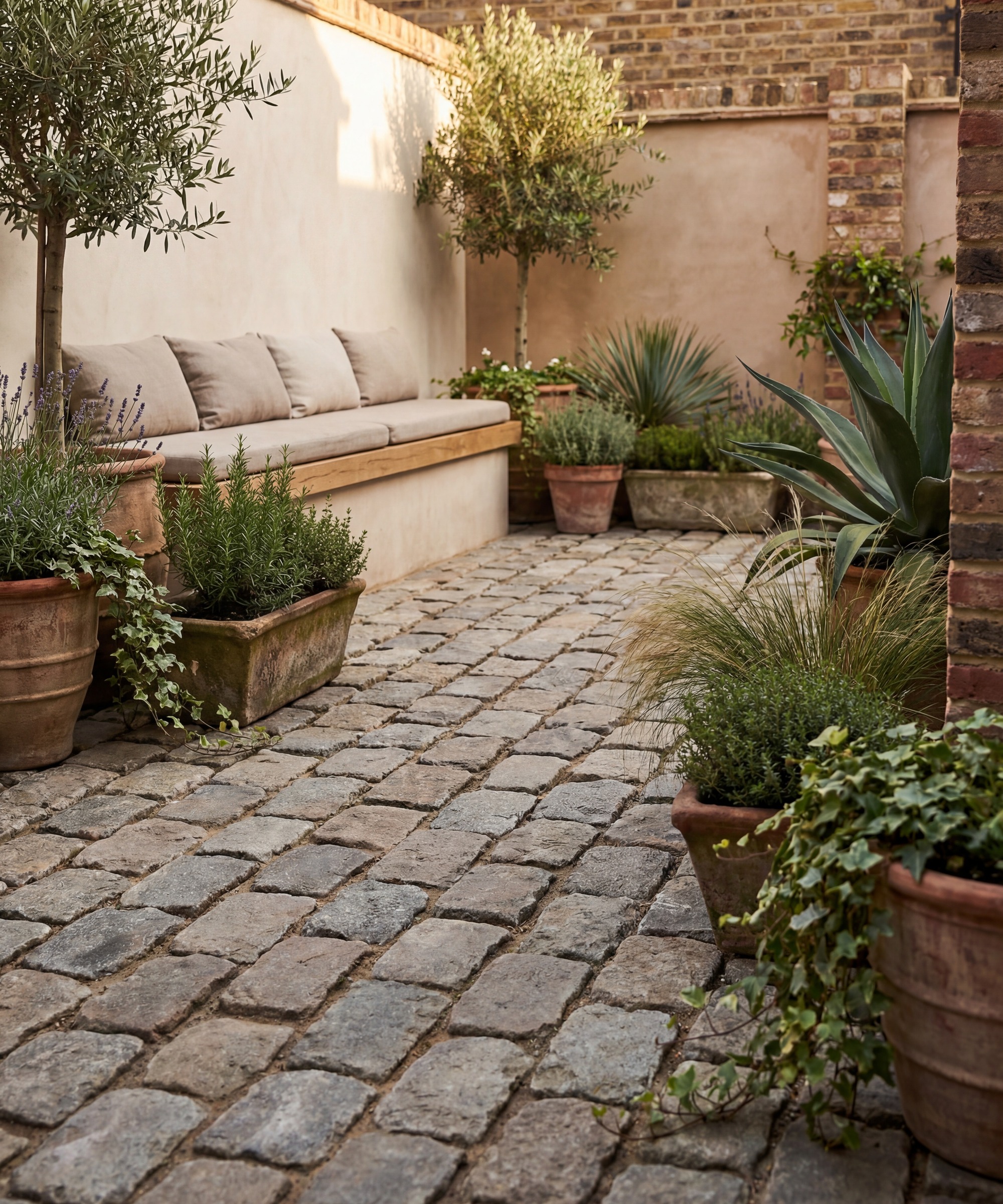
Agave and other architectural succulents bring sharp, sculptural form into a border, a contrast that makes softer surrounding plants look more deliberate by comparison. They need excellent drainage and full sun, so they pair well with gravel garden setups rather than traditional moisture-retentive beds.
Lavender earns its place here for a reason beyond scent, its silvery-green foliage and repeat purple blooms read as effortless, expensive simplicity when planted in a long, uniform border. It's one of the lowest-maintenance plants on this list, needing little more than full sun, sharp drainage, and a hard prune after flowering.
7–9. Statement Flowering Plants
English shrub roses in the David Austin style bring the fragrance and old-world charm that pure hybrid teas lack, layered, cupped blooms in soft peach, blush, and apricot tones that photograph beautifully and smell even better in person. They're thirstier than most plants on this list and need regular watering through dry spells to keep blooming well.
Hydrangea 'Limelight' gives you enormous, cone-shaped lime-green blooms that age to soft pink and rust tones through late summer into fall. Unlike mophead hydrangeas, it blooms reliably on new wood, so a hard late-winter prune won't cost you flowers the following season.
Magnolia, particularly compact varieties suited to smaller gardens, adds an unmistakable sense of maturity and permanence. A well-placed magnolia near an entrance or window does more to make a property feel established than almost any other single plant.
Did You Know: David Austin roses can carry a higher upfront cost than standard garden-center roses, but their repeat blooming and stronger disease resistance often make them cheaper over several years than replacing weaker varieties.
10–12. Texture and Movement
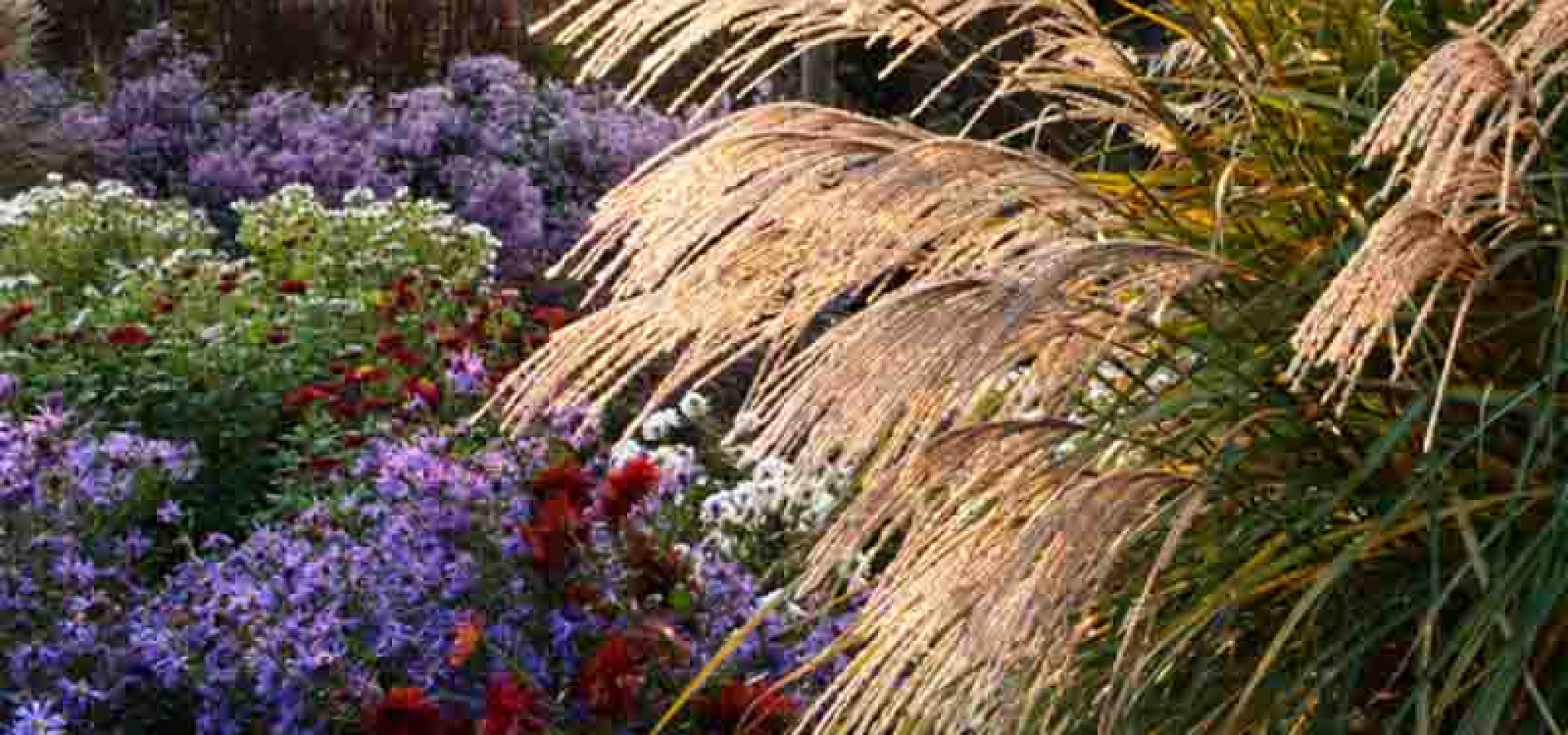
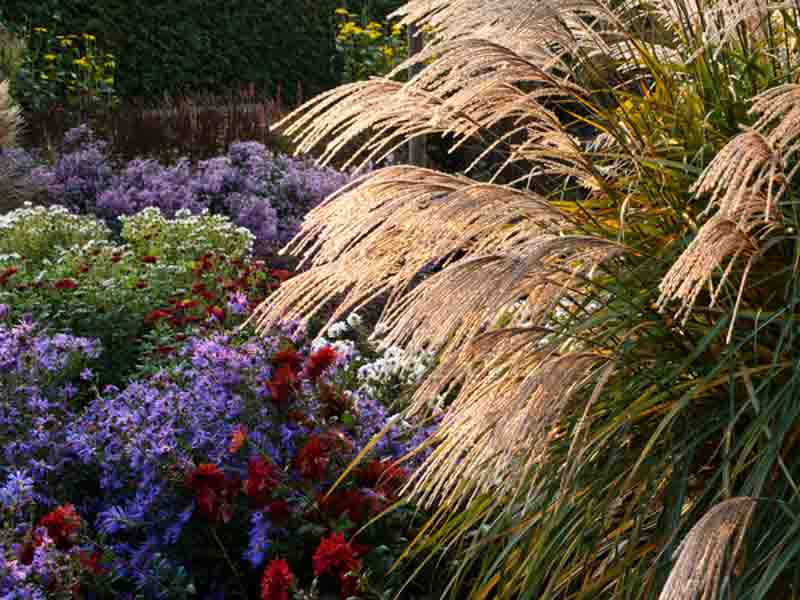
Ornamental grasses like Miscanthus and fountain grass bring movement and softness that pure hedging and topiary can't. Planted in drifts, they catch light beautifully in late afternoon and add a full season of interest even after flowering plants have finished. Proven Winners trials several reliable ornamental grass varieties each year if you want proven performers rather than a gamble.
Japanese maple offers some of the most refined foliage color available, deep reds, oranges, and burgundies that hold their shape beautifully in a container or as a specimen tree. It prefers dappled shade and shelter from strong wind, which can scorch its delicate leaves.
Wisteria, trained over a pergola or archway, brings a sense of drama that few other climbers match, cascading lavender-blue blooms in late spring. It's a long-term investment; wisteria can take several years to flower reliably, and it needs firm, regular pruning twice a year to stop it overwhelming a structure.
13–15. The Finishing Touches
Camellias flower in late winter and early spring when little else in the garden is doing anything, glossy evergreen foliage year-round plus a burst of rose-like blooms when it's needed most. They prefer acidic, well-drained soil and some shelter from harsh midday sun.
Alliums, with their perfectly spherical purple flower heads on tall, bare stems, add a graphic, almost architectural punctuation mark to a border. They're bulbs, so they're planted once in autumn and largely left alone, genuinely low-effort for the visual impact they deliver.
Dahlia 'Café au lait' has become something of a designer favorite for its huge, dinner-plate-sized blooms in soft blush and cream tones, a color that photographs beautifully and reads as far more expensive than a standard bedding dahlia. It needs staking, rich soil, and lifting over winter in colder zones, but the payoff in late summer is hard to match.
Final Thoughts
None of these plants work in isolation, the "luxury" effect comes from restraint and repetition as much as the plants themselves. Two or three matching topiary shapes, a single well-placed magnolia, a long uniform run of lavender, these all look more expensive than one of everything scattered around a border.
Start with one structural anchor, a pair of topiary balls or a standard rose, then build texture and seasonal interest around it. And if you're planning ahead for the colder months, our winterizing checklist covers exactly how to protect tender plants like camellias and dahlias before the first frost.
Frequently Asked Questions
What's the single best plant for making a garden look expensive fast?
Clipped boxwood topiary, particularly in matching pairs at an entrance or path, gives the most immediate sense of intentional design for the least ongoing effort.
Can olive trees survive cold winters?
Olive trees generally need protection below USDA Zone 8. In the UK and colder US regions, grow them in containers so they can be moved into an unheated greenhouse or garage over winter.
Are David Austin roses worth the higher price?
Many gardeners find they are, since their repeat blooming, fragrance, and stronger disease resistance often mean less replacement and maintenance cost over several years compared to standard roses.
How often does boxwood topiary need trimming?
Twice a year is standard, once in late spring and again in late summer, to keep shapes crisp and defined through the growing season.
Do luxury garden plants need more water than average plants?
Not necessarily. Plants like lavender, olive trees, and ornamental grasses are genuinely drought-tolerant. Roses, hydrangeas, and dahlias are the thirstier exceptions on this list.
How long does wisteria take to flower?
Wisteria grown from seed can take many years to flower, so most gardeners plant grafted specimens, which typically bloom within 2 to 3 years with proper pruning.
Do dahlias need to be dug up every winter?
In colder zones, yes, dahlia tubers should be lifted after the first light frost and stored somewhere cool and dry over winter. In milder climates they can often be left in the ground with a thick mulch layer.